
Land Surveying Services
Plats
A plat is a drawing of a parcel of land. More specifically, it is the drawing created by the surveyor that shows the field work, with bearings, distances, and the lots, blocks, streets, and easements being created or changed. We prepare subdivision plats for new development, replats that reconfigure previously platted lots, and amending plats that correct a recorded plat.
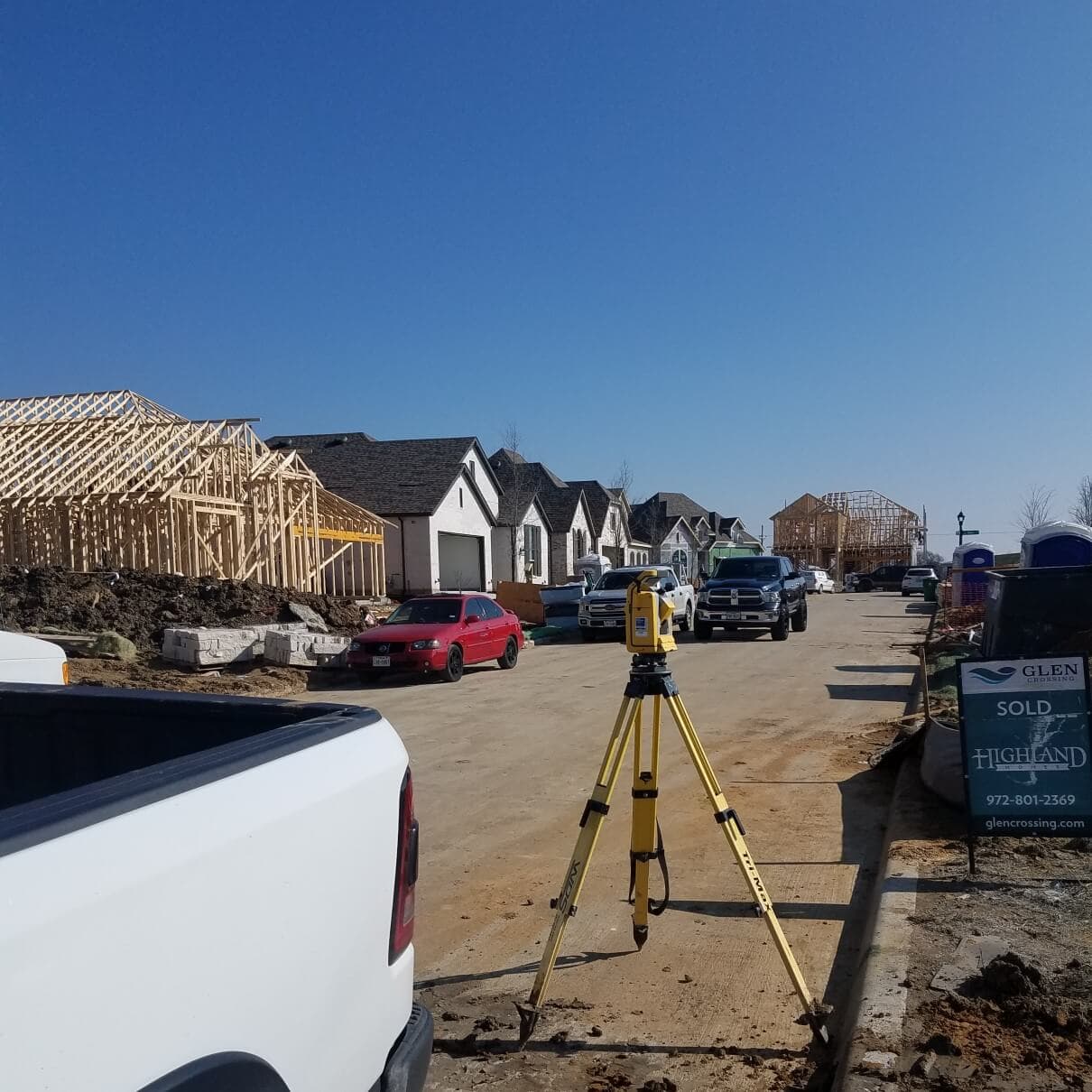
What this service involves
Overview
A subdivision plat divides a tract into lots and dedicates streets and easements. It is typically the first step before lots can be sold or building permits issued in a new development.
A replat is a new plat covering all or part of a previously recorded plat. It is used to combine lots, split a lot, or change easements and building lines. It must meet the city's platting requirements, and for residential property Texas law can add more than the original plat faced — written notice to nearby owners, a hearing where a variance is sought, and a larger council majority if enough adjoining owners object.
An amending plat corrects an error or makes a limited change to a recorded plat, such as fixing a bearing or distance or relocating a lot line to eliminate an inadvertent encroachment, under the conditions Texas law allows for an amendment rather than a full replat.
In every case we survey the boundary, prepare the plat to the requirements that actually govern the tract — the city's inside its limits, the county's in the unincorporated county, and whichever the two have agreed on in a city's extraterritorial jurisdiction — and coordinate revisions through approval and recording.
Common uses
- Creating lots from a larger tract
- Dedicating streets and easements
- Combining or splitting platted lots
- Adjusting building lines or easements
- Correcting a bearing, distance, or lot dimension on a recorded plat
Who this service is for
- Developers
- Builders
- Property Owners
- Civil Engineers
- Title Companies
What you receive
- Plat drawing prepared for city submittal
- Revisions through city approval
- Recorded plat once approved and filed
How the process works
Step 1 — Contact Us
You contact us with the property, the city it is located in, and what the plat needs to accomplish.
Step 2 — Review and Confirm
We research the recorded plat and deed records, confirm which type of plat applies, and confirm scope, pricing, and the city's requirements with you.
Step 3 — Fieldwork Scheduled
Our in-house field crew surveys the boundary and locates the features the plat must show.
Step 4 — Office Processing
Our in-house drafting department prepares the plat, and we coordinate submittal, city comments, and revisions.
Step 5 — Delivery
Once approved, the plat is signed and recorded with the county.
Frequently asked questions
How long does a plat take?
The survey and drawing are the quick part. City review and approval drive the schedule and vary by city. We will give you a realistic timeline for your city when we scope the project.
Do I need a replat to combine two lots?
Not always. Texas law lets a municipality approve an amending plat to relocate lot lines between adjacent lots, provided every owner joins the application, no recorded covenants or restrictions are removed, and the number of lots does not increase — and combining two lots reduces the count. An amending plat is the faster route where it is available. Which process your city will accept depends on its own rules, and we confirm that before we start.
When can an amending plat be used instead of a replat?
Only for the limited purposes Texas law allows, such as correcting errors or relocating a lot line to remove an inadvertent encroachment. If the change goes beyond those, a replat is required. We will tell you which applies to your situation.
Do I need an engineer as well?
Often, yes. Cities usually require civil engineering for streets, drainage, and utilities alongside the plat. We coordinate with your engineer so the plat and the engineering plans agree.
Sources
- 1. Texas Local Government Code ch. 212 — municipal plats, replats (§§ 212.014–212.015) and amending plats (§ 212.016). The statute behind the difference between a plat, a replat and an amending plat inside a city, including the added notice and hearing a residential replat can require. Accessed .
- 2. Texas Local Government Code ch. 232 — county regulation of subdivisions. What governs instead when the tract is in the unincorporated county rather than inside a city. Accessed .