
Land Surveying Services
Lot Stake (Pins)
A lot stake survey, also called lot staking or pinning the lot, involves accurate and visual marking of a lot or tract's corners, and possibly boundary lines, to show a property's boundary on the ground.
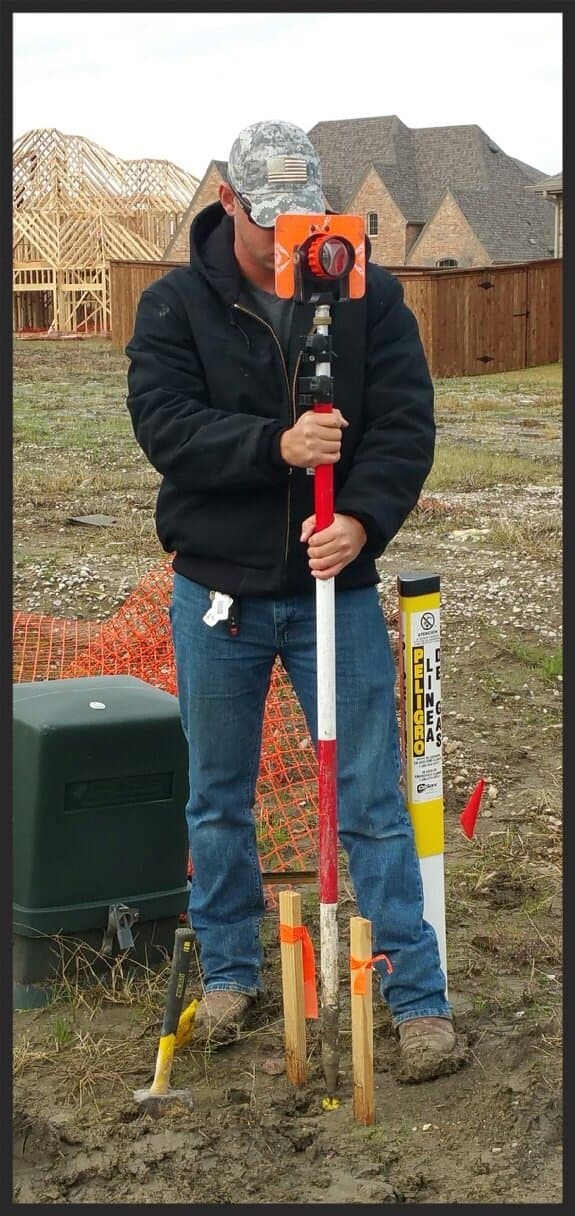
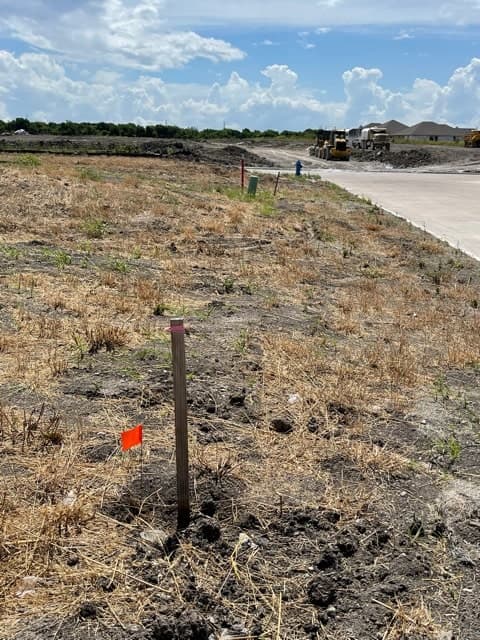
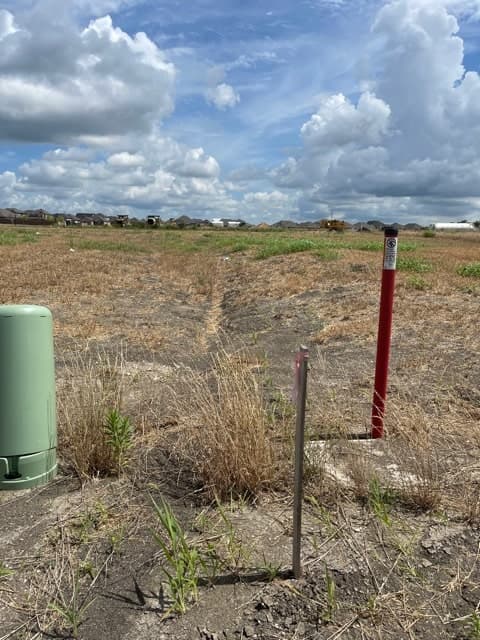
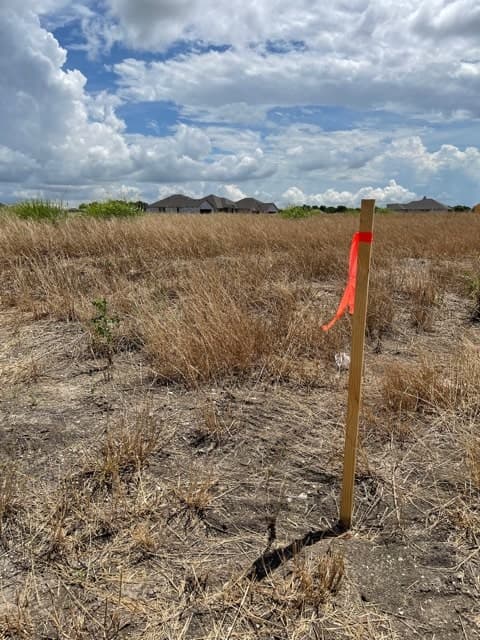
What this service involves
Overview
We use the latest in surveying technology to ensure an accurate staking of the boundary required according to your needs. Whenever possible, we confirm the property corner's monumentation, be it an iron rod (commonly called a pin), concrete monument, or even a fence post, and mark it visually with colored survey tape or paint, usually orange.
We stake the lot once the boundary is confirmed. On builder lots, a lot stake is usually the check before the form crew sets up: each corner monument is confirmed in place and marked so the crew can find it, and any that are missing are reset.
If stakes on line are requested, they are set incrementally along the property's boundary lines to show where the boundary actually exists on the ground.
A lot stake survey alone does not include a drawing at completion. It is intended as a straightforward way of marking a property's corners and boundary.
Common uses
- Checking and marking corners for form crews
- Fence installation
- Showing a boundary to a neighbor or contractor
Who this service is for
- Homeowners
- Builders
- Fence Contractors
- Property Owners
What you receive
- Property corners marked on the ground with tape or paint
- Missing corner monuments reset, with a “ROOME” cap on new iron rods
- Stakes set on the boundary lines when requested
- No drawing is included with this service
How the process works
Step 1 — Contact Us
You contact us with the property address and which corners or lines you need marked. If the address has not been confirmed yet, include the lot, block, and subdivision.
Step 2 — Review and Confirm
We research deed records, plats, and other documents to confirm scope, pricing, and timeline with you.
Step 3 — Fieldwork Scheduled
Our in-house field crew recovers the corners, confirms the monuments, resets any that are missing, and marks them. Surveys usually take four to five business days, depending on how complex the property is and how much research its location needs; homebuilder work is typically one to two business days.
Step 4 — Need a Drawing?
If you also need a drawing, we can perform a boundary survey on the same visit.
Frequently asked questions
Is a lot stake the same as pinning a lot?
Yes. Builders and contractors often ask for “pins on the lot”, or for us to “pin the lot”. Both are a lot stake: our crew checks that each corner pin is in place, resets any that are missing, and flags them so they can be seen.
What if a pin is missing?
We reset it. The lot is staked from the confirmed boundary, so a missing corner can be reset from it. New iron rod pins carry a cap stamped “ROOME”.
Do I get a drawing with a lot stake?
No. A lot stake marks the corners and lines on the ground only. If you need a drawing, order a boundary survey and we can stake the corners on the same visit.
How are the corners marked?
We confirm the existing monument where possible, such as an iron rod (a pin) or concrete monument, and flag it with colored survey tape or paint, usually orange. Stakes on line can be set at intervals along the boundary if requested.
Is the flagged stake the property corner?
No. The corner is the pin, or other monument, in the ground. The stake, flagging, or paint around it is there to help you find the pin. If a stake is knocked over or moved, the corner has not moved.
Can you stake the house?
Yes. Staking the house is a layout rather than a lot stake: a layout marks where an improvement, such as a home, will be built, while a lot stake marks the lot itself. Depending on the builder's preference, we can set the corners of the building or lay out the house envelope, the outermost box the building or improvement will sit inside.
See also
Building homes in a new community? See the Builder Communities where our crews already work.
Related services
Boundary Survey
Boundary surveys for lots and tracts of any size, with the same field work and drafting we apply to a title survey.
Layout / Envelope
Marking where an improvement, usually a house, will be built on the lot: its envelope or building corners, with optional offsets.
Plot Plan (Site Plan)
A drawing of proposed improvements, such as a residence or accessory building, on a property, typically for permitting.